
A little pink in the sink is easy to ignore. It doesn’t hurt, it stops on its own, and it’s so common that plenty of people assume it’s normal. It isn’t. Healthy gums don’t bleed from ordinary brushing, and bleeding is usually the first sign that your gums are inflamed.
The good news is that, caught early, it’s very reversible. Here’s what bleeding gums mean, how gum disease progresses, and how to tell when a regular cleaning is no longer enough.
Key takeaways
- Bleeding when you brush or floss is the most common early sign of gingivitis.
- Gingivitis is reversible. Periodontitis can be controlled, but bone that’s been lost doesn’t grow back.
- According to the CDC, about 42% of U.S. adults 30 and older have periodontitis.
- Gum disease is usually painless, which is why measuring your gums at checkups matters.
- A deep cleaning (scaling and root planing) treats infection below the gumline that a regular cleaning can’t reach.
Why your gums bleed when you brush
Most of the time, the cause is plaque, the sticky film of bacteria that builds up along the gumline. When it sits there, your gums respond with inflammation: they turn red, puff up, and bleed easily. That’s gingivitis.
A few other things can make bleeding more likely:
- Brushing too hard, or using a hard-bristled brush
- Starting to floss after a long break (this should settle within a week or two of daily flossing)
- Hormonal changes, especially during pregnancy
- Some medications, including blood thinners. Don’t stop a prescription on your own; let your dentist and doctor know instead.
- Diabetes, which is linked to more serious gum disease
Smoking is a special case. It can actually reduce gum bleeding by restricting blood flow, which hides gum disease while it quietly gets worse.
The four stages of gum disease
Gum disease doesn’t happen overnight. It moves through stages, and the earlier it’s caught, the simpler the fix.
Stage 1
Gingivitis
Red, puffy gums that bleed when you brush or floss. No bone loss yet.
ReversibleStage 2
Early periodontitis
Plaque and tartar move below the gumline. Pockets start to form and early bone loss begins.
TreatableStage 3
Moderate periodontitis
Pockets deepen and more bone is lost. Gum recession, bad breath, or sensitivity may appear.
ManageableStage 4
Advanced periodontitis
Teeth can loosen, shift, or change your bite. Without treatment, teeth may be lost.
Needs prompt care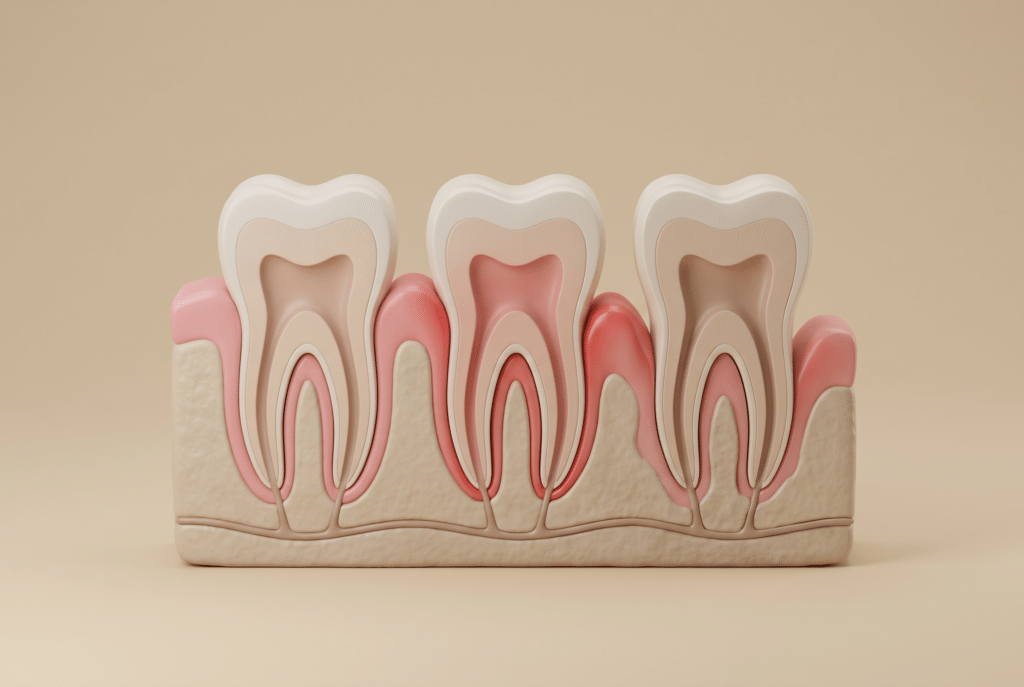
Periodontitis is common and serious. The CDC estimates that about 42% of adults 30 and older have it, and about 8% have a severe form. It’s also a leading cause of tooth loss in adults.
Warning signs to watch for
- Gums that bleed when you brush or floss
- Red, swollen, or tender gums
- Bad breath or a bad taste that doesn’t go away
- Gums pulling away from your teeth, so teeth look longer
- Sensitivity near the gumline
- Teeth that feel loose or have started to shift
- A change in how your teeth fit together when you bite
Notice what’s missing from that list: pain. Gum disease is usually painless until it’s well advanced, which is why it’s so often found at a routine visit rather than noticed at home.
How your gums are checked
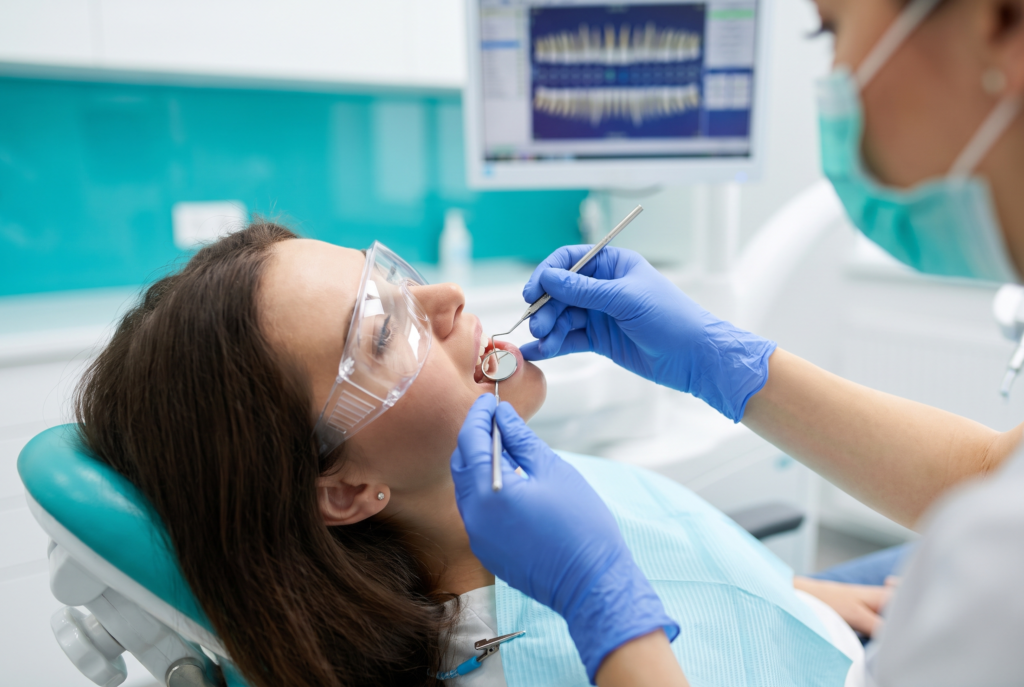
During your exam, your hygienist gently measures the small space between each tooth and the gum around it using a thin instrument called a periodontal probe. Healthy gums typically measure about 1 to 3 millimeters. Readings of 4 millimeters or more, especially with bleeding, suggest infection has moved below the gumline. X-rays show what’s happening to the bone underneath.
It takes a few minutes and doesn’t hurt. Those numbers, tracked over time, are what tell us whether a regular cleaning is enough. It’s one more reason regular dental checkups are worth keeping.
Regular cleaning vs. deep cleaning
| Regular cleaning | Deep cleaning (scaling and root planing) | |
|---|---|---|
| Who it’s for | Healthy gums or mild gingivitis | Periodontitis with pockets below the gumline |
| Where it cleans | Tooth surfaces, at and just under the gumline | Down to the base of each pocket, plus smoothing the root surfaces |
| Numbing | Usually not needed | Local anesthetic, so you stay comfortable |
| Visits | One | Often two, one side of the mouth at a time |
| Follow-up | Every six months for most people | Periodontal maintenance, often every three to four months |
Scaling removes plaque and hardened tartar from below the gumline. Root planing smooths the root surfaces so the gums can heal and fit snugly against the teeth again. A regular cleaning simply can’t reach that deep, so when pockets have formed, a deep cleaning is the treatment that matches the problem.
What a deep cleaning feels like, and how recovery goes
The area is numbed first, so most people feel pressure and vibration rather than pain. Afterward, some tenderness and temperature sensitivity for a few days is normal. To make those days easier:
- Stick to softer foods for a day or two
- Rinse gently with warm salt water
- Use a desensitizing toothpaste if cold drinks bother you
- Keep brushing and flossing gently; clean gums heal faster
A few weeks later, your gums are measured again. Pockets often shrink as the inflammation settles down.
Protecting your gums at home
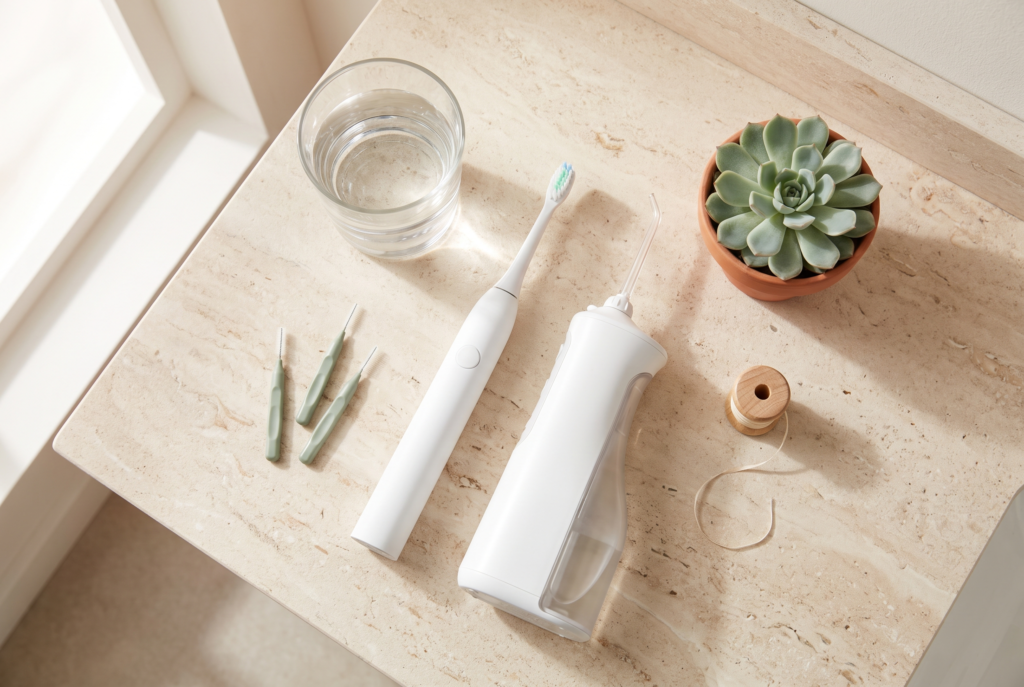
- Brush twice a day for two minutes with a soft-bristled brush, angled toward the gumline
- Clean between your teeth every day with floss, interdental brushes, or a water flosser
- Don’t smoke, since it raises your risk and masks the warning signs
- Keep your checkups, or your maintenance schedule if you’ve had a deep cleaning
For a complete daily routine, see our oral hygiene guide.
Healthy gums come first for every other treatment
Your gums and jawbone are the foundation everything else sits on. Before dental implants, Invisalign, or porcelain veneers, active gum disease needs to be under control. Implants depend on healthy bone, aligners move teeth through it, and veneers look their best framed by firm, healthy gums.
Gum treatment is often covered by dental insurance and is generally an eligible FSA and HSA expense. If you still have benefits left this year, read our guide to using your dental benefits before they reset.
When to call right away
Call us promptly if bleeding won’t stop, if you notice swelling or a pimple-like bump on your gum, or if a tooth suddenly feels loose. These can signal an infection that needs care soon. Here’s what to do before an emergency dental visit.
If facial swelling comes with a fever, or you have trouble swallowing or breathing, go to the emergency room.
Frequently asked questions
Is it normal for gums to bleed when I floss?
Not if you floss regularly. Mild bleeding is common in the first week or two after you start, while inflamed gums heal. If it continues past that, have your gums checked.
Can gum disease be reversed?
Gingivitis can be fully reversed with a professional cleaning and good daily care. Periodontitis can’t be fully reversed, because lost bone doesn’t regrow on its own, but treatment and regular maintenance can stop it and keep it stable.
Does a deep cleaning hurt?
The area is numbed first, so most people feel pressure rather than pain. Some tenderness and sensitivity for a few days afterward is normal.
How long does a deep cleaning take?
It depends on how many areas need treatment. It’s often split into two visits, one side of the mouth at a time, and your dentist will tell you how long to plan for after measuring your gums.
Is a deep cleaning covered by insurance?
Many dental plans cover scaling and root planing as a basic service, usually at a lower percentage than routine cleanings. FSA and HSA funds can generally be used for your share.
Will my gums grow back?
Receded gum tissue doesn’t grow back on its own. Treatment stops it from getting worse, and in some cases gum grafting can cover exposed roots.
Book a gum health check
If your gums bleed when you brush, don’t wait for it to hurt. A cleaning and gum evaluation with our team and Dr. Azadeh Ashtiany shows exactly where you stand and what, if anything, needs treatment.